
Our History
The decision to form Norwich City Football Club was made on June 17, 1902, at a meeting called by Robert Webster and Joseph Nutchey at the Criterion Café.
Webster became the club's first chairman and Arthur Turner, effectively City’s first manager, began recruiting players. A ground on Newmarket Road was obtained on a sub-lease from the Norfolk County FA. The first match was a 1-1 draw at home to Harwich and Parkeston on September 6, 1902, with James Shields scoring City’s equalising goal.
The song ‘On The Ball, City’ was adopted quickly by the club's supporters. It had evolved from similar songs used by several local clubs. City’s version would remain their anthem.
In that era all clubs gained nicknames. A few journalists occasionally referred to ‘The Citizens’, a term used for several other clubs, but by 1905 City were known as ‘The Canaries’.
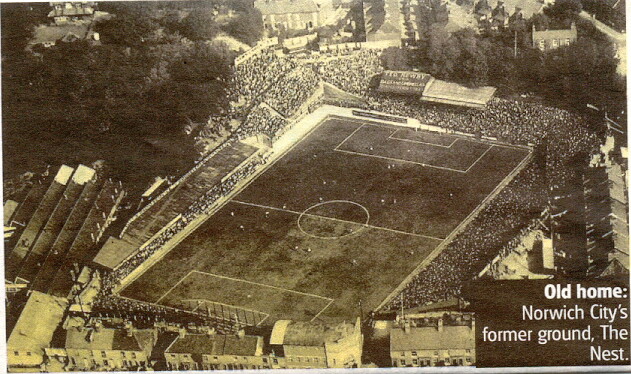
The club soon grew. It became professional in 1905 and 5,000 £1 shares were made available. City joined the Southern League in 1905/06 and moved to a new ground, The Nest on Rosary Road, in 1908.
Little thought or discussion was devoted to team colours or emblems in City’s early amateur days. The first shirts were of pale blue and white halves. A letter from “an ardent City supporter” to the ‘Eastern Daily Press’ in 1907 suggested the team should play in “canary jerseys”. An identity was forming. The idea was adopted by the club's directors and for 1907/08 City had yellow shirts with green collars and cuffs. (The canary emblem did not feature on shirts for several more seasons.)
Image
Financial difficulty meant that when football was suspended during the First World War the company entered voluntary liquidation. The club resumed in 1919.
City progressed into the Football League in 1920 as founder-members of the new Third Division. The first match was a 1-1 draw away to Plymouth Argyle.
In March 1930, City achieved their highest score in a Football League match, beating Coventry City 10-2.
In 1933/34, City gained promotion to Division Two as champions.
Set in a former chalk pit cut into the hillside, The Nest was an extraordinary, but impracticable, setting for football matches. Stands and terraces were fitted in at unusual angles and part of the pitch was bordered by a concrete retaining wall. The Nest’s attendance record came when Sheffield Wednesday won an FA Cup match at the ground in February 1935. Over 25,000 were squeezed in; many more were locked out.
A new ground was needed and, on May 31, 1935, the club announced that it was to lease a site at Carrow Road. Work constructing the stadium began on June 11 and the first Football League match was played there on August 31, 1935. City beat West Ham United 4-3 with Doug Lochhead scoring the first goal.
Image
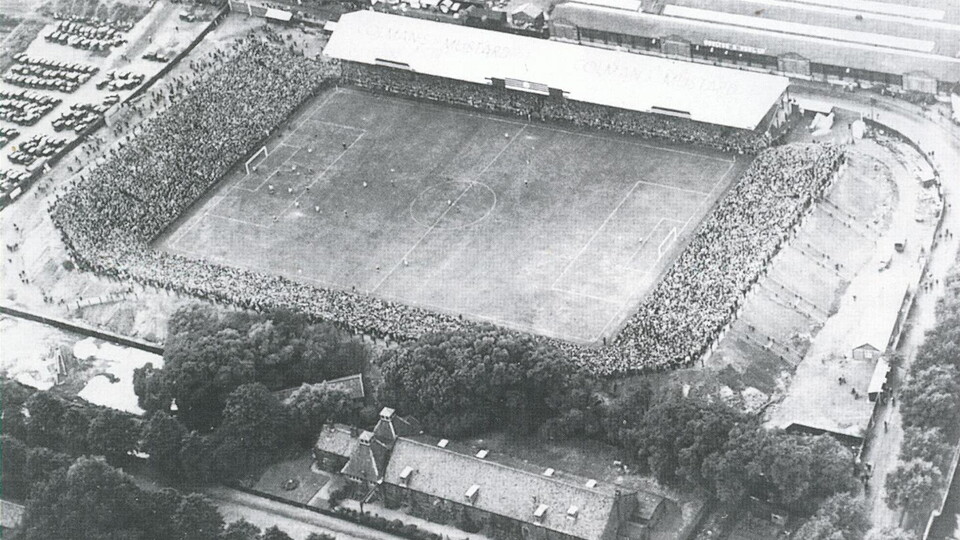
By late 1956, City had severe financial problems. It was only after an Appeal Fund was established and generous donations were received from local companies and individuals that the club could continue. A new board of directors was formed, with Geoffrey Watling as chairman.
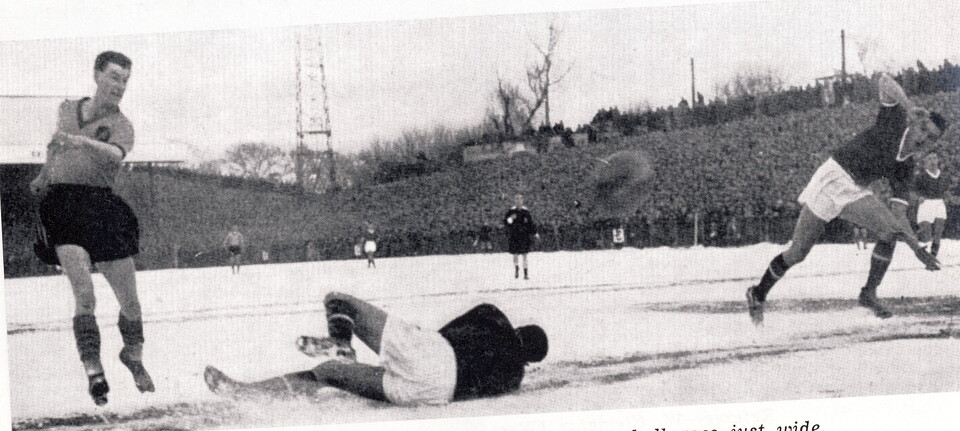
A club’s fortunes are seldom far from fluctuating. City’s efforts, and those of their supporters, in the FA Cup in 1958/59 held the nation’s attention. Under Archie Macaulay’s management City, despite being in Division Three, beat Manchester United of the First Division 3-0 in the third round on a snow-covered Carrow Road pitch. Cardiff City, Tottenham Hotspur, and Sheffield United were also beaten, before a defeat by Luton Town of Division One in a semi-final replay.
In the following season a promotion back to Division Two was achieved. In 1962, the club won its first major trophy, beating Rochdale over two legs in the final of the League Cup. Captain was Ron Ashman, a first-team player with City for 21 seasons and later the club's manager.
A record attendance of 43,984 at Carrow Road saw the 2-0 defeat by Leicester City in the FA Cup sixth round in 1962/63.
Under Ron Saunders’ management, City were promoted as champions in 1971/72, reaching the top tier of English Football for the first time. In the following season they were minutes from earning their first-ever appearance at Wembley Stadium when their League Cup semi-final was abandoned because of fog. They beat Chelsea in the replayed match but lost 1-0 to Tottenham Hotspur in the final. Another Wembley defeat followed, losing to Aston Villa in the same competition in 1975. Then, with Ken Brown as manager, a semi-final victory against Ipswich Town over two legs (with goals by John Deehan and a late header by Steve Bruce) took City back to Wembley for the Milk Cup Final in 1985. An own goal by Gordon Chisholm gave a 1-0 victory over Sunderland.
Image
The Wembley victory brought qualification for European competition but then English clubs were banned from taking part after events at the Heysel Stadium. Two more seasons of unrewarded European qualification came under David Stringer’s management. Then, with Mike Walker in charge of the team, City finished third in the inaugural season of the Premier League and were able to take part in the UEFA Cup in 1993/94.
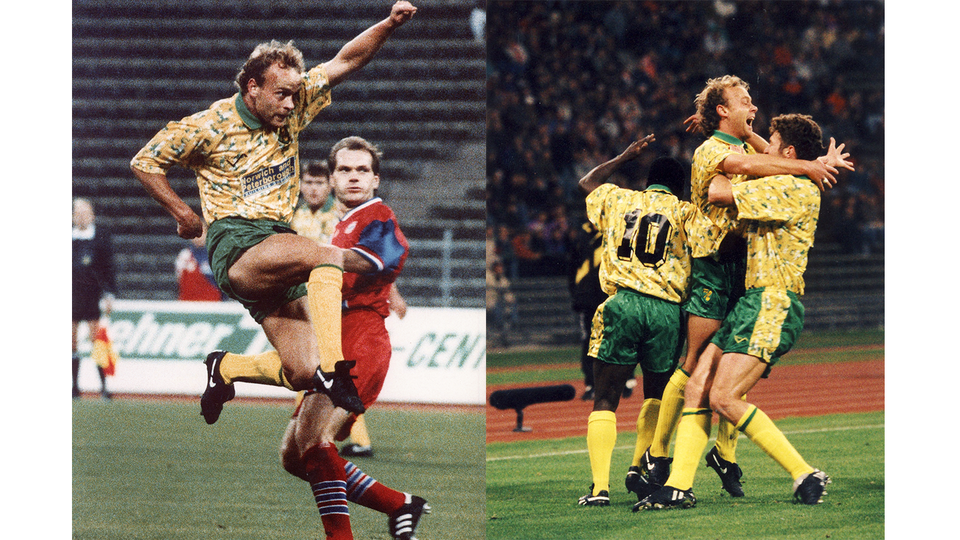
After progressing to the second round City faced Bayern Munich. A spectacular volley by Jeremy Goss gave them the lead which was increased by Mark Bowen. A 2-1 victory was the only one by an English club at the Olympic Stadium. In the second leg, Bayern soon scored but a Goss equaliser took City through – to be drawn against Inter Milan. Injuries and suspensions weakened the team and City lost both matches 1-0. Goss was to create one more memory in the season, scoring the only goal at Liverpool’s Kop end in the final match before that terrace was converted to seating.
Changes were to come to the club's administration in 1996. Chairman, and majority shareholder, Robert Chase sold his shares to Geoffrey Watling and left the club. Delia Smith and Michael Wynn Jones joined a new board of directors and, after further investment, they became majority shareholders.
Image
In 2002, City narrowly missed a return to the top tier, losing to Birmingham City with a deciding series of penalty kicks in the play-off final at the Millennium Stadium. However, in 2003/04 City were promoted as champions, eight points ahead of the second-placed club.
Relegation followed immediately, and after the 2008/09 season, City dropped into the third tier. The stay was brief. Under Paul Lambert, two immediate promotions took the club back to the Premier League.
City were relegated again in 2014, returning under Alex Neil with a 2-0 victory over Middlesbrough in the 2014/15 play-off final. Cameron Jerome and Nathan Redmond were the scorers, with Jerome becoming the first City player to score in a Wembley Stadium final.
Another relegation followed and, in the spring of 2017, change was made to City’s administrative structure with Stuart Webber appointed as the club’s sporting director; a new role at the club.
Daniel Farke was appointed as head coach and led City to another Championship title with 94 points in 2018/19.
Image
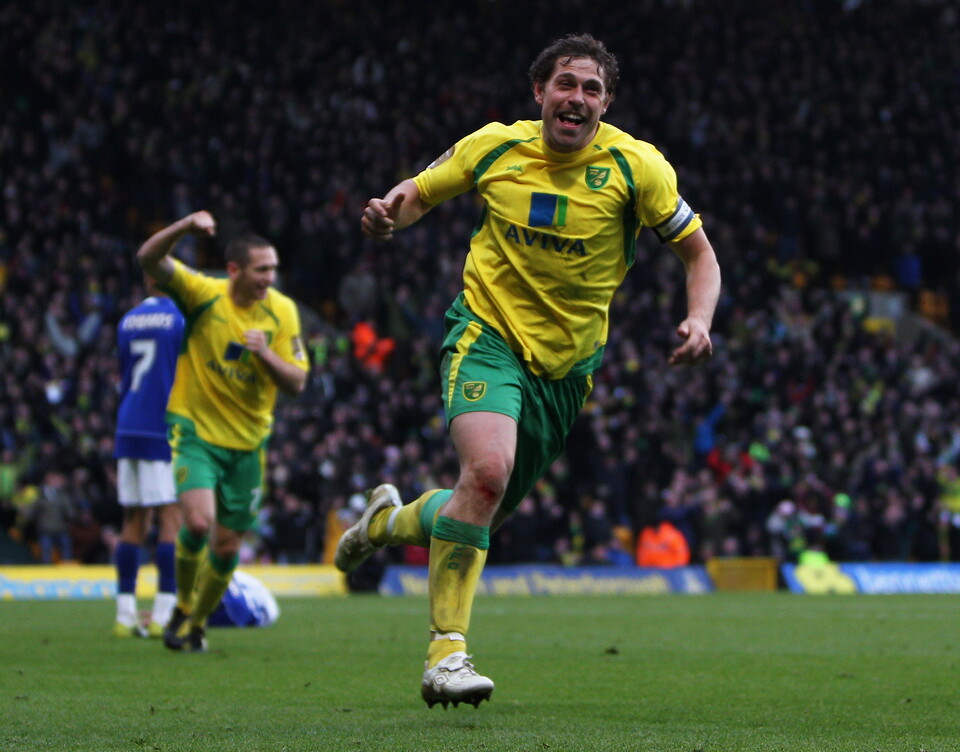
The 2019/20 season was interrupted by the Covid-19 pandemic. Fixtures were suspended. Football’s authorities then decided that the season would continue but with supporters excluded from matches. City were relegated.
Restrictions were lessened briefly at some clubs (including at Carrow Road) in 2020/21 but the season concluded with matches again played in private. City were promoted as champions with 97 points. During the following season, Farke was replaced by Dean Smith but relegation was not avoided.
In 2022, the club confirmed that an American group led by Mark Attanasio had acquired a shareholding in the club and he joined the board of directors. That shareholding would later equal that of Smith and Wynn-Jones with plans for Attanasio and his group to take a controlling stake in the club from March 2025.
These words have kindly been provided by the Norwich City Football Club Historical Trust. You can visit their website HERE.